Learning Outcomes
By the end of this lesson, students should be able to:
i. Define enzyme inhibitors and explain their role in modulating enzyme activity.
ii. Differentiate between competitive, non-competitive, and uncompetitive inhibition.
iii. Describe the mechanisms of each type of inhibition, including the binding sites and effects on enzyme-substrate interactions.
iv. Explain the concept of reversible and irreversible inhibition and how it impacts enzyme activity and function.
v. Appreciate the significance of enzyme inhibitors in regulating biochemical pathways and their potential therapeutic applications.
Introduction
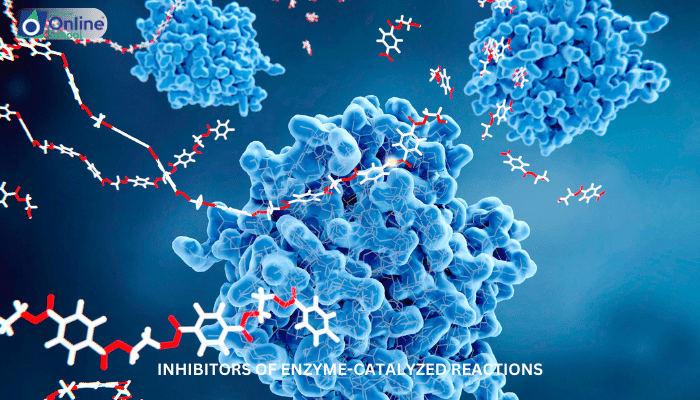
Enzyme inhibitors are molecules that bind to enzymes and reduce their catalytic activity. They play a crucial role in regulating biochemical pathways, controlling cellular processes, and maintaining homeostasis. Understanding the different types of enzyme inhibitors and their mechanisms of action is essential for appreciating their significance in biological systems and potential therapeutic applications.
i. Competitive Inhibition: A Tug-of-War for the Active Site
Competitive inhibitors resemble the enzyme's substrate and compete for binding to the active site. When a competitive inhibitor binds to the active site, it blocks the substrate from binding, preventing the catalytic reaction from occurring. Competitive inhibition can be overcome by increasing the substrate concentration, which displaces the inhibitor and allows the substrate to bind.
ii. Non-competitive Inhibition: Disrupting the Enzyme's Conformational Dynamics
Non-competitive inhibitors bind to an allosteric site, a distinct region on the enzyme that is not the active site. Upon binding, the non-competitive inhibitor induces a conformational change in the enzyme, altering the active site's structure and reducing its catalytic activity. Non-competitive inhibition cannot be overcome by increasing the substrate concentration.
iii. Uncompetitive Inhibition: A Ternary Complex with Reduced Activity
Uncompetitive inhibitors bind to the enzyme-substrate complex (ES complex), preventing the formation of the enzyme-product complex (EP complex). This type of inhibition requires the presence of both enzyme and substrate for the inhibitor to bind. Uncompetitive inhibition is not affected by substrate concentration.
iv. Reversible vs. Irreversible Inhibition: A Matter of Permanence
Reversible inhibition is characterized by the ability of the inhibitor to dissociate from the enzyme, allowing enzyme activity to recover. In contrast, irreversible inhibition involves the formation of a covalent bond between the inhibitor and the enzyme, permanently inactivating the enzyme.
v. Significance of Enzyme Inhibitors in Biological Regulation
Enzyme inhibitors play a crucial role in regulating biochemical pathways, ensuring that metabolic processes proceed at optimal rates and that cells respond appropriately to internal and external stimuli. For instance, feedback inhibition, where the end product of a metabolic pathway inhibits an earlier enzyme in the pathway, prevents the overproduction of metabolites.
vi. Therapeutic Applications of Enzyme Inhibitors
Enzyme inhibitors have found widespread applications in medicine as therapeutic agents. Drugs designed to inhibit specific enzymes can be used to treat various diseases, such as:
- Ace inhibitors for hypertension
- Statins for lowering cholesterol levels
- Antidepressants that inhibit monoamine oxidase
- Antibiotics that inhibit bacterial enzymes
Enzyme inhibitors are essential regulators of biochemical pathways and play a critical role in maintaining cellular homeostasis. Understanding the different types of enzyme inhibitors and their mechanisms of action provides a foundation for appreciating their significance in biological systems and their potential therapeutic applications.
